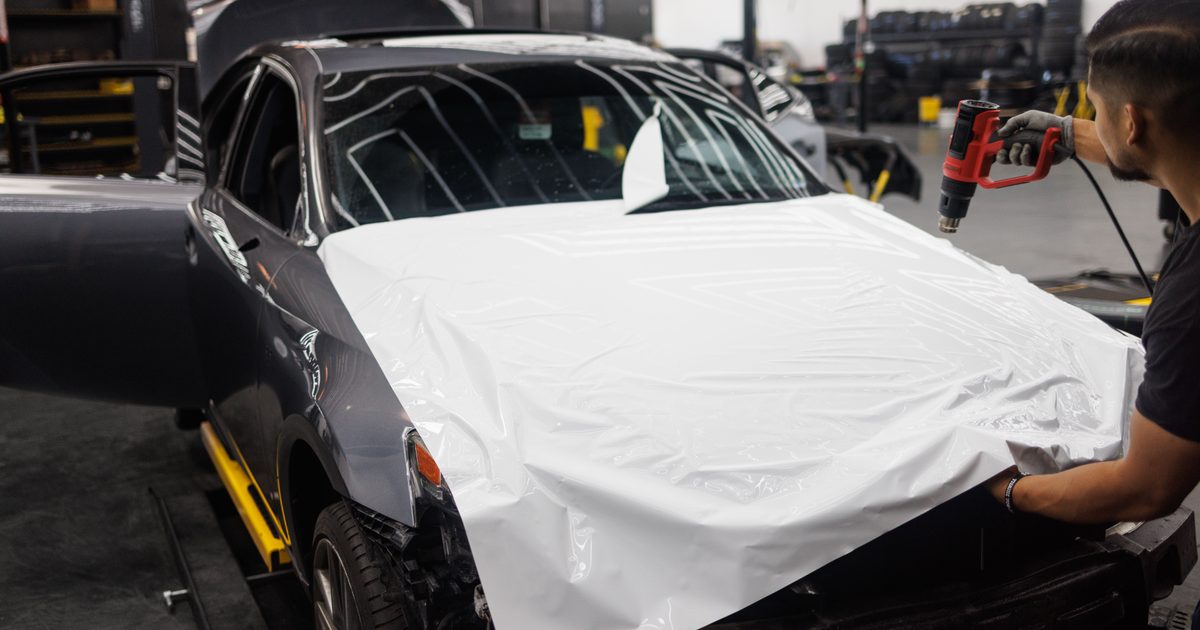
Quick answer
A full professional car wrap typically costs between $2,000 and $5,000 for a standard sedan using quality cast vinyl from brands like 3M or Avery Dennison. The final price depends on three primary factors: vehicle size (a compact coupe uses roughly 50-60 ft² of vinyl while a full-size SUV can demand 75-100 ft²), material grade (cast vinyl at $2.50-$3.50/ft² versus calendared at $1.00-$1.50/ft²), and finish type (gloss and satin are standard, but chrome and color-shift films can triple material costs). Labor is the largest line item — a skilled installer needs 12-20 hours for a full wrap, billed at $75-$150/hour depending on market and complexity. Specialty finishes like chrome ($6,000-$10,000), color-shift ($4,000-$7,000), and custom printed graphics add significant cost. Paint correction, if needed, adds $300-$800 before wrapping can begin. Partial wraps (roof, hood, racing stripes) start around $500-$1,500.
What drives the price up
- Vehicle size directly determines material needed — a compact sedan requires 50-60 ft² of vinyl while a full-size SUV or van can need 75-100+ ft², adding $100-$400 in material alone
- Cast vinyl (3M 2080, Avery Supreme) costs $2.50-$3.50 per square foot and conforms to complex curves, while cheaper calendared film ($1.00-$1.50/ft²) wrinkles on curves and lasts only 2-3 years vs 5-7 for cast
- Specialty finishes multiply cost dramatically — gloss/satin are standard, matte adds 10-20%, color-shift (chameleon) adds 50-100%, and chrome or brushed metal can cost 3-5x more than standard gloss
- Labor is 60-70% of total cost — a full wrap takes 12-20 hours at $75-$150/hour; complex vehicles with deep bumpers, spoilers, or chrome trim take significantly longer
- Paint preparation is mandatory — any scratches, rock chips, or oxidation must be corrected ($300-$800) before vinyl will adhere properly; wrapping over damaged paint locks in the defects
- Custom design work — printed graphics, logos, or multi-color patterns require graphic design ($200-$500) and digital printing ($5-$15/ft²) on top of base material costs
How to get an accurate quote
-
Measure your vehicle and estimate material
Count doors, note body style, and estimate square footage. Sedans: 50-60 ft², coupes: 45-55 ft², SUVs: 65-85 ft², trucks/vans: 75-100+ ft². Add 15-20% waste factor for overlap and mistakes.
-
Choose your vinyl grade and finish
Cast vinyl (3M 2080, Avery Supreme, Orajet 970) is the only choice for a quality full wrap — expect $2.50-$3.50/ft² for gloss/satin, $3.50-$5.00 for matte, $5.00-$8.00 for color-shift, and $15-$25 for chrome.
-
Get at least 3 itemized quotes
Provide exact year/make/model and desired finish. Ask each shop to break out material, labor, prep, and disassembly. Red flag: any quote below $2,000 for a full sedan wrap is likely cutting corners on prep or using calendared film.
-
Verify what is included
Confirm: surface prep and paint correction, removal of handles/mirrors/trim (not just trimming around them), door jambs, warranty (2-5 years typical), and post-install inspection after 48 hours of curing.
-
Budget for hidden costs
Paint correction: $300-$800 if needed. Old wrap removal: $400-$800. Ceramic coating over wrap: $300-$600. Design/print for custom graphics: $200-$500. Factor 15-20% contingency on top of the quoted price.
When professional installation is worth it
- You want a warranty-backed installation — reputable shops offer 2-5 year warranties against peeling, lifting, and fading; DIY wraps have no recourse
- Your paint has rock chips, scratches, or oxidation that must be corrected before vinyl will adhere — wrapping over defects makes them permanent and visible
- You need chrome, color-shift, or custom printed graphics — these materials are unforgiving and require experienced hands; mistakes cost more than the labor
- Your vehicle has complex surfaces — deep bumpers, aggressive spoilers, recessed door handles, or chrome trim pieces that require disassembly to wrap properly
Cost by vehicle type
| Vehicle type | Vinyl needed | Price range |
|---|---|---|
| Compact coupe (e.g., Honda Civic 2-door) | 45-55 sq ft | $2,000-$3,000 |
| Sedan (e.g., Toyota Camry) | 50-60 sq ft | $2,500-$3,500 |
| Mid-size SUV (e.g., Ford Explorer) | 65-75 sq ft | $3,000-$4,500 |
| Full-size SUV (e.g., Chevy Tahoe) | 75-90 sq ft | $3,500-$5,500 |
| Pickup truck (e.g., Ford F-150) | 70-85 sq ft | $3,000-$5,000 |
| Sports car / Supercar | 55-70 sq ft | $4,000-$8,000+ |
How finish type affects price
| Finish | Cost premium | Notes |
|---|---|---|
| Gloss | Base price | Closest to OEM paint look; most popular choice |
| Satin / Matte | +10-20% | Non-reflective; hides minor imperfections well |
| Color-shift / Chameleon | +50-100% | Changes color with viewing angle; eye-catching but harder to install |
| Brushed metal / Carbon fiber | +100-200% | Textured finish mimics real metal or carbon weave |
| Chrome | +200-400% | Mirror-like finish; extremely difficult to install; $6,000-$10,000+ total |
Additional costs to budget for
- Paint correction ($300-$800) — Required if paint has scratches, chips, or oxidation; vinyl magnifies surface defects
- Old wrap removal ($400-$800) — Removing previous vinyl adds labor; old adhesive residue must be cleaned
- Ceramic coating over wrap ($300-$600) — Extends wrap life by 1-2 years and adds hydrophobic properties; UV protection
- Aftercare products ($50-$150) — Specialized wrap-safe soap, sealant, and microfiber cloths for maintenance
Real-world cost examples
2018 Honda Civic Sedan
Estimated cost: $2,500-$3,200
Straightforward body panels with minimal complex curves; standard sedan size means efficient material use; 2-door handles and mirrors add minor labor
2020 Tesla Model 3
Estimated cost: $2,800-$3,800
Smooth aerodynamic surfaces are ideal for wrapping; flush door handles require careful technique; charge port area needs precise cutting
2019 Ford F-150 Crew Cab
Estimated cost: $3,500-$5,000
Large flat panels (doors, bed sides) are easy to wrap but total surface area is high; tonneau cover and bed liner edges add complexity
2021 Jeep Wrangler Unlimited
Estimated cost: $4,000-$5,500
Removable top and doors create unique wrapping challenges; exposed hinges, roll bar cutouts, and rugged texture require extra labor hours
2017 Porsche 911 Carrera
Estimated cost: $6,000-$8,000
Complex curves on rear engine cover and widebody fenders demand master-level technique; chrome material is unforgiving and shows every imperfection
2022 Lamborghini Huracan
Estimated cost: $8,000-$12,000+
Supercar complexity: extreme curves, air intakes, active aero panels; shops charge premium rates; every panel is a compound curve; installation often takes 3-5 days with 2 technicians
Total Cost of Ownership: Wrap vs Paint vs PPF vs Plasti Dip
Estimates based on average US market pricing for a mid-size sedan; lifespan ranges reflect real-world durability under normal driving conditions
| Option | Upfront | Lifespan | Per year | Reversible | Verdict |
|---|---|---|---|---|---|
| Vinyl Wrap | $2,500-$5,000 | 5-7 years | $360-$1,000 | Yes | Best balance of color change and protection; fully removable |
| Professional Paint | $3,000-$10,000+ | 10-15 years | $200-$1,000 | No | Most durable but permanent and most expensive for quality work |
| Paint Protection Film (PPF) | $2,000-$7,000 | 7-10 years | $200-$1,000 | Yes | Best for protection but self-healing clear film; no color change |
| Plasti Dip / Rubber Coating | $500-$1,500 | 1-3 years | $170-$1,500 | Yes (peels off) | Cheapest DIY option but short lifespan and lower finish quality |
Wrap Alternatives Side-by-Side
| Option | Best for | Cost | Durability | Reversible | Finish |
|---|---|---|---|---|---|
| Vinyl Wrap | Full color change, advertising, personalization | $2,500-$5,000 | 5-7 years | Yes | High |
| PPF (Paint Protection Film) | Protecting original paint from chips and scratches | $2,000-$7,000 | 7-10 years | Yes | Invisible (clear) |
| Ceramic Coating | UV and chemical protection on existing paint | $500-$2,000 | 2-5 years | No | Enhances existing |
| Plasti Dip | Budget DIY temporary color change | $500-$1,500 | 1-3 years | Yes (peels) | Low-Medium |
For a reversible color change, vinyl wrapping offers the best combination of finish quality, durability, and value. PPF wins for pure protection. Ceramic coating complements either option.
How pricing varies by region
- High-cost markets (NYC, LA, San Francisco, Seattle) — +20-35%. Premium labor rates ($120-$150/hr), high shop overhead, strong demand from luxury vehicle owners
- Mid-cost markets (Chicago, Dallas, Atlanta, Denver) — Baseline (0%). Standard US pricing; competitive market with multiple shops to choose from
- Lower-cost markets (rural areas, smaller cities) — -10-20%. Lower labor rates ($75-$90/hr) but fewer experienced installers; may need to travel for quality work
- Luxury vehicle specialists (Miami, Beverly Hills, Las Vegas) — +40-60%. Premium positioning, exotic car expertise, concierge service; expect $5,000+ minimum for any full wrap
Red flags when choosing a wrap shop
- Quotes under $2,000 for a full sedan wrap — this almost certainly means calendared vinyl, no paint prep, or trimming around hardware instead of disassembling
- Shop cannot name the vinyl brand or shows you unlabeled rolls — counterfeit and low-grade vinyl is common; insist on 3M, Avery, Orajet, or KPMF
- No written warranty or warranty under 1 year — reputable installers stand behind their work for 2-5 years
- Installer refuses to remove door handles, mirrors, or trim — proper wrapping requires disassembly; wrapping around hardware creates visible seams and lifting edges
- Shop has no portfolio or before/after photos — quality wrappers document their work; no portfolio means inexperience
- Pressure to pay full amount upfront — standard practice is 50% deposit (materials) with balance due on completion and inspection
- Shop is unwilling to let you watch or inspect the work in progress — transparency matters; hiding the workspace suggests shortcuts
Maintaining your car wrap
- Wait 48 hours after installation before washing to let the adhesive fully cure
- Hand wash only with wrap-safe soap (pH-neutral, no wax or solvent-based cleaners); automatic car washes with brushes will scratch and lift edges
- Avoid parking in direct sunlight for extended periods; UV is the #1 cause of wrap fading; use a car cover or garage when possible
- Do not use pressure washers closer than 3 feet or above 2,000 PSI; high pressure water lifts edges and forces water under the film
- Clean bird droppings, tree sap, and bug splatter immediately; their acids etch into the vinyl within hours
- Inspect edges and seams every 3-6 months; lift corners caught early can be re-adhered; once dirt accumulates underneath, the panel must be re-wrapped
Frequently asked questions
Is it cheaper to wrap or paint a car?
A basic single-color paint job ($1,000-$3,000) is often cheaper than a quality wrap ($2,500-$5,000), but a quality paint job that matches wrap finish quality costs $5,000-$10,000+. Wrapping is also reversible while painting is permanent.
How long does a car wrap last?
A quality cast vinyl wrap lasts 5-7 years with proper care. Gloss and satin finishes tend to last longest (6-7 years), while matte and chrome may show wear sooner (4-5 years). UV exposure and harsh washing are the main lifespan reducers.
Can I wrap my car myself?
DIY wrapping is possible for small areas (roof, hood, mirrors) but a full-vehicle wrap requires professional tools, a climate-controlled space, and significant skill. Mistakes are costly — a ruined roll of vinyl is $200-$400. Budget 40-60 hours for a first-time full wrap.
Will wrapping damage my car's paint?
Quality cast vinyl applied to factory-cured OEM paint will not damage it when properly removed. However, wrapping over aftermarket paint, touch-ups, or damaged clear coat can cause paint to peel with the vinyl. Always test a small area first.
How much does a partial car wrap cost?
Partial wraps (roof, hood, racing stripes, or accents) cost $300-$1,500 depending on area and complexity. A roof wrap is typically $400-$800, while hood + roof + trunk is $800-$1,500.
How long does it take to wrap a car?
A professional shop typically needs 2-4 days for a full vehicle wrap: 1 day for prep and disassembly, 1-2 days for installation, and partial day for reassembly and inspection. Complex vehicles or specialty finishes may take 5-7 days.
How much does it cost to remove a car wrap?
Professional wrap removal costs $400-$800 for a sedan, depending on wrap age and condition. Older wraps (5+ years) are harder to remove and cost more. DIY removal is possible but risks paint damage if done improperly.
Can I wrap a leased car?
Yes, wrapping a leased car is common and generally acceptable since quality vinyl is fully removable. However, check your lease terms, inform your insurer, and keep documentation. Remove the wrap before lease return to avoid reconditioning charges.
Related questions
Expand related questions
- how much does a partial car wrap cost
- is it cheaper to wrap or paint a car
- how long does a car wrap last